I often walk in the woods near my home; the walk is a chance to think through things and it calms the mind. Such walks through the woods are an obvious metaphor for a walk through internal landscapes, and the thoughts flowing through one’s mind can seem crystal clear enough to warrant noting down, either in the moment or later.
But one difficulty with nature writing is knowing where to begin. The obvious, immediate choice is to write from a position of supposed objectivity: this isn’t about me, or what I saw, or did, or thought, or felt; this is about the external world of nature as it is. One retreats behind a barrier of objectivity. The risk is of perceived arrogance: my perception is objective, perhaps yours isn’t. Or one can write from a more personal perspective: this isn’t a big claim to objective fact, this is what I saw, and heard, and thought, and felt. Here, the risk is again of perceived arrogance: in today’s parlance, one is ‘centring’ the experience, and the discussion of the experience, on oneself. By writing from your own voice, your own perspective, you are not writing from another perspective or another voice, and thus may be seen as dismissing or silencing other voices. (Yet a paradox: if you can’t write with your own voice, no one can, and everyone is silenced.) So, where to begin…?
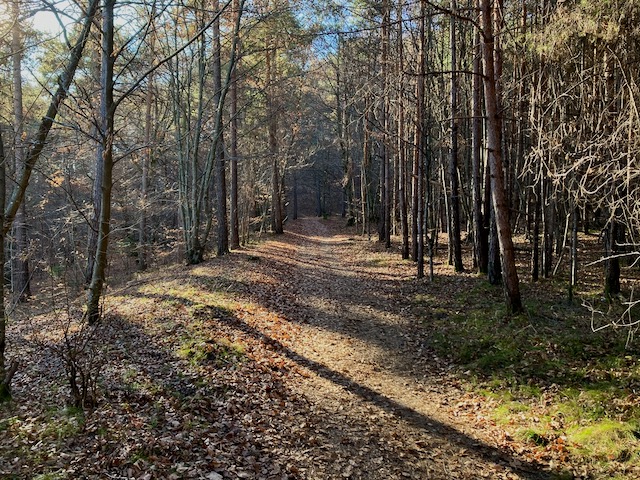
A path though the woods iPhone SE2, 26mm f/1.8 equivalent lens, 1/121 sec at ISO 50, -0.4 ev
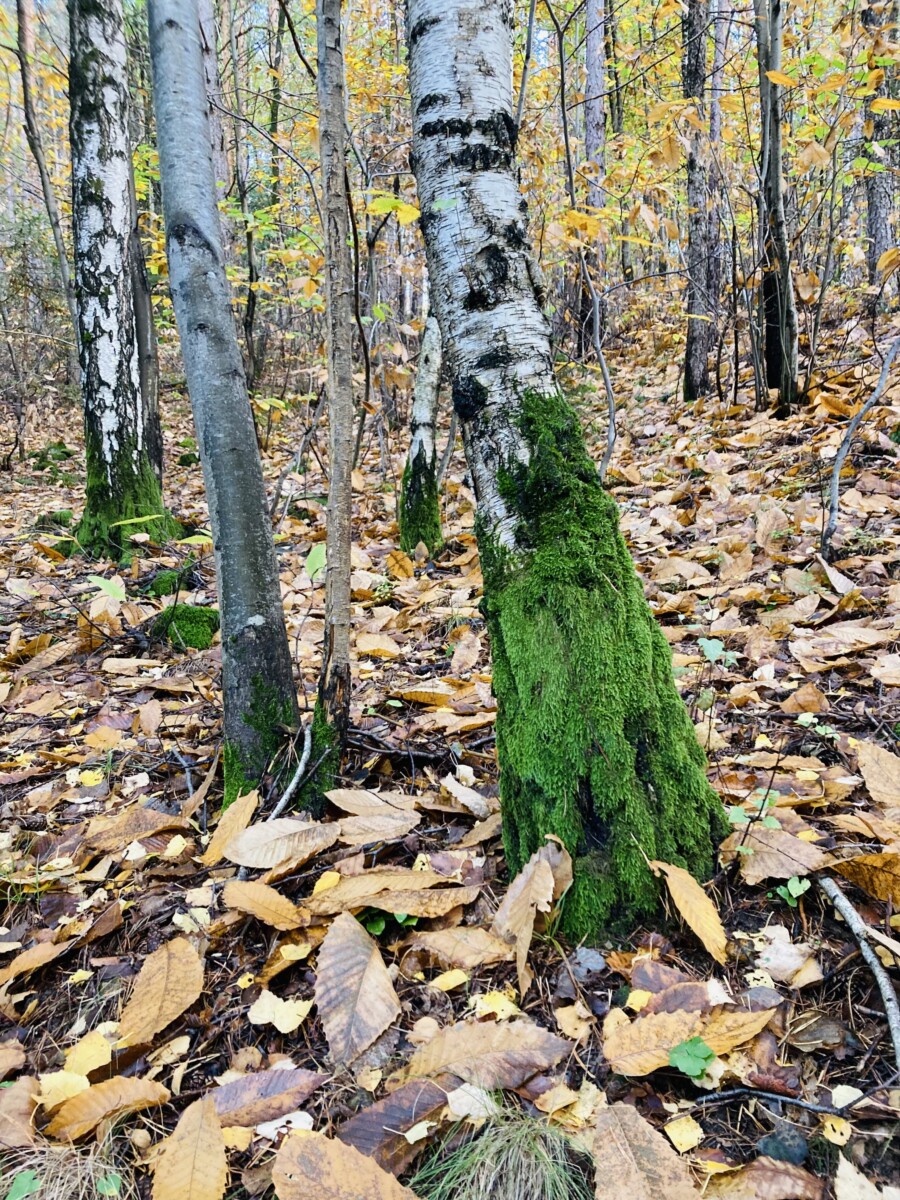
I often walk in the woods near my home; the walk is a chance to think through things and it calms the mind. But one mustn’t confuse a walk in the woods with a walk through an internal landscape; the woods are too important for that, too vital, too firm in their actuality. To confuse the internal and external landscapes cheapens both. To prioritise the thoughts fighting for space in my head, or the crystal-clear thoughts that might flow as I walk, can mean being blind to the life of the woods around me. The woods in winter are quiet, particularly around town, but not empty. Deciduous trees appear dead, conifers alone still showing some signs of life. Concentration is needed to see beyond this. There are mosses, grasses, bracken, heathers, gorse, all still visibly holding on.
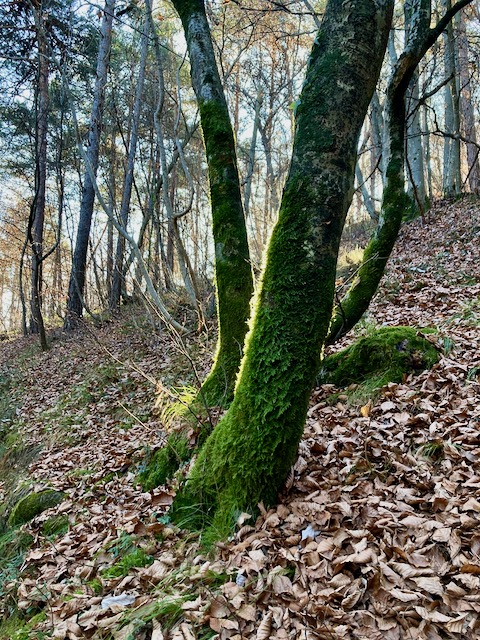
These small signs are, nonetheless, as artlessly beautiful as the last glow of the day reflected pinkly on the mountains, and just as shaped by the light. The low winter sun raking through the trees, picking out fallen leaves. Bracken, just catching the sun. Moss on a tree, backlit, appearing to glow from within.
Backlit iPhone SE2, 26mm f/1.8 equivalent lens, 1/76 sec at ISO 80, -0.5 ev
Wildlife here is mostly heard rather than seen, sometimes only an implied presence. There are bears in the hills, but they mostly don’t come so close to town; boars have also been sighted, introduced by hunters, but again mostly keep away from town. A reminder, though, that these woods are not necessarily as safe or as tame as they might first appear. Deer are more frequent, but mostly heard as a crash in the distance, retreating even when already out of sight. Sometimes I can catch a glimpse of a retreating white tail among the denser trees, but it’s rare to see more than that.
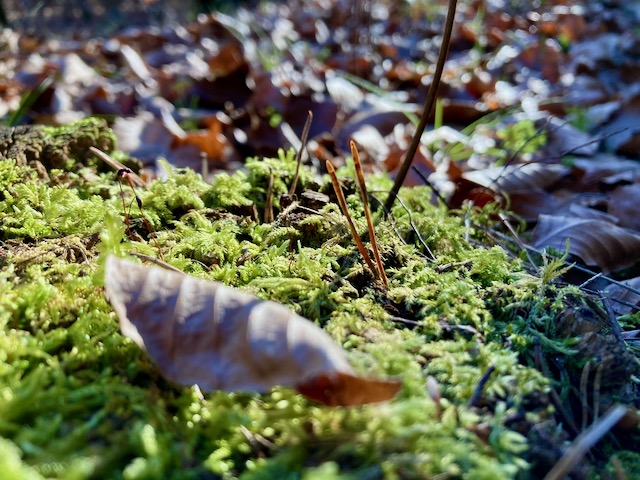
Moss, a scene in miniature (perhaps Ceratodon purpureus?) iPhone SE2, 26mm f/1.8 equivalent lens, 1/171 sec at ISO 20
Birds, however, are a more constant presence. I hear them whistling and chirping in the distance if I stop and am quiet for a few minutes. There is a view over the lake, and I often stop and sit there for a while. When I’m pushed for time, that’s my walk: I walk to the lookout, sit for a bit, then walk home. Often, if I wait, if I’m quiet, if there aren’t other walkers around, I’ll see some closer up: a finch, or a warbler, or a brambling, a treecreeper, or perhaps a woodpecker. Sometimes I might see a kite circling over the valley below, gliding on the thermals.
Today, though, an odd bird: booming like a bittern but quite different and more irregular; a chee-wup! or kee-op! call, slow to start, ending with an abrupt rifle snap. After a few minutes, these were replaced by the guttural aark of a pair of common ravens (Corvus corax) or hooded crows (Corvus cornix). In Australia, I’d think it was an eastern whipbird (Psophodes olivaceus), but I don’t think one of these has followed me here. A mystery, even so close to home? A reminder of one’s own ignorance? But the question shouldn’t be about me. A bird calling in the woods is more interesting than that; to reduce it to a personal mystery is to cheapen it.
One reason that Italian wines are a constant source of interest for wine enthusiasts1 is that, pretty much no matter how long you’ve been studying wine, you’ll always keep coming across new regions and new grapes you’ve not heard of previously. This can happen when visiting a supermarket, or when travelling — particularly in regions not known for their wine.
For me, at least, Lombardy is such a region. I’m not sure why. It does grow quite a bit of wine, and some regions, such as Valtellina, are not particularly obscure. I guess it lacks any ‘big names’ — there is no village with the stature or recognition of Barolo or Brunello here. But — thankfully — that’s not all there is to wine.
I’ve been lucky enough to visit Brescia and Bergamo a number of times, and have enjoyed finding out about the wines grown in their respective regions. With the exception of Franciacorta sparkling wine, which I won’t cover here, neither are terribly well known outside the region, but both are — to my mind — well worth exploring. I’ll quickly run through a few of the regions I’ve come across so far, and give some details of the wines I’ve tried.
Brescia
Pusterla vineyard, Brescia.
Brescia’s vineyards sit between the mountains and the plain, with Alpine breezes on one side and warm Po Valley sunshine on the other. These are the same hills that give the world Franciacorta sparkling wine, but the still wines deserve a little attention too. Curtefranca DOC covers much of the same ground, and the soils are a patchwork — limestone and marl here, glacial debris there — all of which helps keep the wines lively. The reds lean on Bordeaux grapes like ‘Cabernet Sauvignon’ and ‘Merlot’, often with an Italian twist from ‘Nebbiolo’ or ‘Barbera’, while the whites are typically ‘Chardonnay’ and ‘Pinot bianco’.
One curiosity worth mentioning is the Pusterla vineyard, Europe’s largest urban vineyard, which clings to the slopes just below Brescia’s castle. This sun-exposed hillside is the top of a stratified limestone spur, and is known for its marl and flint nodules, also called medolo. First planted in 1037 by the royal monastery of Santa Giulia, the site has undergone many changes of ownership over the centuries and has been abandoned at various points. Despite its difficult history, it is now thriving again under the care of Emanuele Rabotti (Monte Rossa winery, Franciacorta). This unique vineyard is home to a unique grape — ‘Invernenga’, a rare late-ripening white with unusually thick, polyphenol-rich 🦜 skins. Once grown mostly for passito, it now makes dry whites with a pleasantly savoury edge — a little slice of vineyard history hidden in the city.
Nike, Brescia Roman Temple
If you follow the vines south, you come to Montenetto di Brescia IGT, centred on Monte Netto, a clay-rich rise out of the plain. Viticulture here likely started with the Romans, once the marshy soils had been drained, but the first definite reference to wine growing in the region was in the sixteenth century, with Le dieci giornate della vera agricoltura e dei piaceri della villa by Agostino Gallo, Renaissance agronomist, which mentions ‘Marzemino’ in particular, now grown as Capriano del Colle DOC Marzemino. The IGT rules are broad, but the standouts are ‘Trebbiano’ in its various guises and ‘Marzemino’, alongside ‘Barbera’, ‘Sangiovese’, ‘Merlot’, and ‘Chardonnay’. The whites tend to be floral and lightly fruity, while the reds are fresh and harmonious — the sort of bottles made for local trattoria cooking rather than long-term cellaring.
Curtefranca DOC
2020 Ferghettina Curtefranca Colour: Medium(+) purple Nose: medium(-) intensity, tertiary, developing. Redcurrant, cassis, strawberry, pomegranate, cherry syrup. Blueberry. Mushroom, barnyard, forest floor, cough syrup. Cedar, sweet spice. Palate: dry, medium(+) acidity, medium tannins, medium alcohol (13,5%), medium bodied. Medium length finish, medium intensity. Redcurrant, cassis, strawberry, pomegranate, cherry syrup. Blueberry. Mushroom, barnyard, forest floor, cough syrup. Cedar, sweet spice. Conclusions: very good. Can drink now, but suited to further ageing. Seal: cork Blend: 50% Cabernet Sauvignon, 30% Merlot, 10% Nebbiolo, 10% Barbera – I am not sure if this varies somewhat from year to year Tasted 17/2/2023
2022 Ferghettina Curtefranca Colour: medium (+) purple Nose: medium(-) intensity, secondary, youthful. Red and black plum, blackcurrant, fruiti di bosco jam, blueberry. Smoke, bergamot. Charred oak. Palate: dry, medium acidity, medium tannins, medium alcohol (13,5%), medium bodied. Medium intensity, medium length finish. Red and black plum, blackcurrant, fruiti di bosco jam, blueberry. Smoke, bergamot. Charred oak. Conclusions: good — but not as interesting as I remember from last time. P&P (pop&pour), not decanted. Half bottle at Ma!Osteria Brescia Tasted 23/8/2025
2019 Ca’ del Bosco ‘Corte del Lupo’ Curtefranca Colour: medium(+) ruby Nose: medium intensity, secondary, youthful. Pomegranate (esp. on first opening), red cherry, blueberry. Strawberries stewed in balsamic vinegar. Cedar, cinnamon, maybe vanilla. Dried herbs. Touch of earthiness. Pomegranate seemed most dominant when first opened, but blueberry came to the fore with air. Palate: dry, medium(+) acidity, medium(+) tannins, medium alcohol (13%), medium bodied. Medium intensity, medium(+) length finish. Pomegranate (esp. on first opening), red cherry, blueberry. Strawberries stewed in balsamic vinegar. Cedar, cinnamon, maybe vanilla. Dried herbs. Touch of earthiness. Conclusions: very good. Quite lithe and elegant, refined but with an earthy savouriness. Can drink now, but likely suited to further ageing. Just as good on day 2, after being left open overnight. Seal: natural cork 49% Merlot, 31% Cabernet Sauvignon, 9% Cabernet Franc, 11% Carménère Tasted 15/4/2023
2018 Coop Vitivinicola Cellatica Gussago Curtefranca Rosso Colour: medium garnet Nose: medium(+) intensity, tertiary, developing. Red and black plum, plum jam, bramble, cassis. Tamarillo. Black pepper, tomato stem. Some savoury character and maybe the start of forest floor character. Palate: dry, medium acidity, medium(+) tannins, medium alcohol (13%), medium bodied. Medium intensity, short finish. Red and black plum, plum jam, bramble, cassis. Tamarillo. Black pepper, tomato stem. Some savoury character and maybe the start of forest floor character. Conclusions: good — let down slightly by the short finish. Can drink now, but suited to further ageing. P&P (pop&pour), not decanted. Seal: DIAM2 cork Merlot, Cabernet Franc, Cabernet Sauvignon. Tasted 21/5/2024
2015 Ricci Curbastro ‘Vigna Santella del Gröm’ Curtefranca Colour: medium(+) ruby Nose: medium(+) intensity, secondary, youthful. Strawberry, redcurrant, red and black plum. Blackcurrant jelly? Strawberry jam? Blueberry. White pepper, cedar, nutmeg, bread dough. Smoke and maybe bergamot. Palate: dry, medium(+) tannins (fine grained, silky, but drying), medium acidity, medium alcohol (12,5%), medium(-) bodied. Strawberry, redcurrant, red and black plum. Blackcurrant jelly? Blueberry. White pepper, cedar, nutmeg. Cough syrup/medicinal. Bergamot? Conclusions: very good. Can drink now, but suited to further ageing. Quite fresh and young at eight years of age. Relatively light and dominated by red fruit. The tannins and acidity work well with food. Very drinkable. Blend of Cabernet Franc, Merlot, Cabernet Sauvignon, Carmenere, and Barbera. Tasted 7/11/2023
2021 Ferghettina Curtefranca Bianco Colour: pale lemon-green Nose: medium intensity, secondary, youthful. Green apple, lemon, lemon peel. Pineapple. Nectarine. Honey. White flowers. Lees character: biscuit and cream. Palate: dry, medium(+) acidity, medium alcohol (12,5%), medium(-) bodied. Medium intensity, medium long finish. Green apple, lemon, lemon peel. Pineapple. Nectarine. Honey. White flowers. Lees character: biscuit and cream. Green apple very dominant when first opened, but improves with air. Conclusions: good. Can drink now, but suited to further ageing. Pretty good value at €9.50! Seal: technical cork. DAY2: left in fridge overnight. Green apple and nectarine still prominent, but now maybe with wet stone and saline notes. 80% Chardonnay 20% Pinot Blanc (Pinot Bianco) Tasted 6/6/2023
Montenetto di Brescia IGT
2021 Barone Pizzini Montenetto di Brescia IGT Colour: pale lemon yellow Nose: medium intensity, secondary, youthful. Lemon, lemon peel. Apple — Granny Smith, Russet. White flowers. Cream? Palate: dry, high acidity, medium alcohol (13%), medium bodied. Medium intensity, medium length finish. Lemon, lemon peel. Apple — Granny Smith, Russet. White flowers. Cream? Conclusions: good. Can drink now, but suited to further ageing. P&P (pop&pour), not decanted. Seal: DIAM5 technical cork Blend of Trebbiano & Chardonnay Tasted 18/8/2024
Vino di Tavola (Pusterla vineyard, Brescia)
2020 Monte Rossa Pusterla Vino Bianco Colour: medium gold Nose: medium intensity, secondary, youthful. Dried apricot, lemon, lemon peel, underripe pineapple. Heritage apples. Honeyed. Almonds? Ginger? Wet stone, saline. Hay. Palate: dry, medium(+) acidity, medium alcohol (12%), medium(-) bodied. Dried apricot, lemon, lemon peel, underripe pineapple, kiwifruit. Heritage apples. Honeyed. Ginger? Wet stone, saline. Conclusions: very good. I wasn’t expecting much from this for whatever reason — I worried it might just be a novelty — but it’s a genuinely interesting, complex, and unusual wine. Hard to pin down the flavours and aromas precisely. 100% late harvest Invernenga, an autochthonous grape cultivar from Brescia, Lombardy, Italy, and grown in a vineyard within the castle grounds of Brescia — said to be the largest urban vineyard in Europe. P&P (pop&pour), not decanted. Seal: screwcap. Tasted 2/5/2024
Bergamo
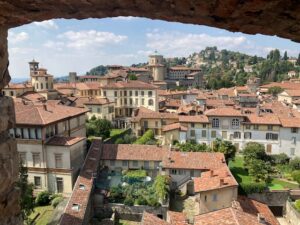
Bergamo and the Bergamo hills, from la Torre Civica
Bergamo also boasts a long relationship with the vine. The Romans planted vineyards around Scanzorosciate, and the region was well regarded enough for its wine that the village of San Lorenzo had a temple to Bacchus. The Lombard invasions set viticulture back, but monasteries kept the culture of the vines alive, and by the fifteenth century Bergamo’s wines were pouring into Milan. Like elsewhere, phylloxera caused devastation, but early twentieth-century replantings set the stage for the region’s modern revival.
The creation of the Valcalepio DOC in 1976 was a key moment for the modern history of wine growing in Bergamo. The DOC covers the hills between the Orobic Alps, Lake Iseo, and Monte Canto. The reds are usually Bordeaux blends — a bold choice at the time — ‘Merlot’ with ‘Cabernet Sauvignon’, occasionally scented with the local ‘Moscato di Scanzo’. The whites draw on ‘Chardonnay’, ‘Pinot bianco’, and ‘Pinot grigio’. They’re good food wines, often with a savoury edge that suits the region’s hearty cooking. In 1993, a Valcalepio rosso riserva DOC was created, allowing for the production of longer-aged wines. Also worth noting: a passito made from ‘Moscato di Scanzo’, made locally since at least 1347, is said to have been a favourite of Catherine the Great. (I’ve yet to try this myself… even in Italy, the wines from here can be a bit tricky to find!)
Terre del Colleoni DOC, a newer denomination (2011), takes in a broader cast of grapes: ‘Schiava’, ‘Marzemino’, ‘Franconia’, and the rare ‘Incrocio Terzi’, along with ‘Manzoni bianco’. These wines tend to be fruit-forward and easy to enjoy, from pale, cherry-coloured reds to aromatic whites with citrus and stone-fruit lift. To my mind, it’s when you add in the tiny appellations such as Moscato di Scanzo DOCG — a sweet red made from the native grape of the same name — that Bergamo’s picture comes fully into focus, making it far more interesting than its low profile might suggest.
And that, really, is the point: neither Brescia nor Bergamo may be household names in the wine world, but both reward a little curiosity — and a bottle or two shared2 at the table.
Valcalepio DOC
2020 Locatelli Caffi Valcalepio Colour: medium (-) purple Nose: medium (-) intensity, secondary, youthful. Cassis, red plum, red cherry, pomegranate. Cola. Blackcurrant leaf, maybe green capsicum? Sweet spice. Earthy, forest floor Palate: dry, medium acidity, medium tannins, medium alcohol)13%), medium bodied. Medium (-) intensity , medium(-) length finish. Cassis, red plum, red cherry, pomegranate. Cola. Blackcurrant leaf, maybe green capsicum? Sweet spice. Earthy, forest floor Conclusions: good. Can drink now but suited to further ageing Seal cork. Merlot – Cabernet blend. Notes from half bottle at Da Ornella, Bergamo Tasted 2/6/2023
2023 Locatelli Caffi Valcalepio Colour: medium ruby Nose: medium(-) intensity, secondary, youthful. Red plum, blackcurrant. Strawberry, redcurrant. Gooseberry, green capsicum. Sweet spice. Palate: dry, medium(-) tannins, medium alcohol (13,5%), medium acidity, medium bodied. Red plum, blackcurrant. redcurrant. Gooseberry, green capsicum. Sweet spice. Conclusions: good – just a little short on the palate. Can drink now, but suited to further ageing. P&P (pop&pour), not decanted. Half bottle at Trattoria da Ornella, Bergamo. Tasted 26/8/2025
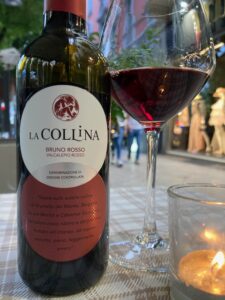
2018 La Collina ‘Bruno’ Valcalepio Rosso Colour: medium(-) ruby Nose: medium intensity, secondary, youthful. Fruits of the forest: strawberry, blueberries, blackberry, blackcurrant, redcurrant. Hint of forest floor? With air, dried orange peel. Vanilla, cedar. Palate: dry, medium(-) acidity, medium(-) tannins (v.smooth & fine grained), medium alcohol (13,5%), medium(-) bodied. Medium intensity, medium length finish. Fruits of the forest: strawberry, blueberries, blackberry, blackcurrant, redcurrant. Hint of forest floor? With air, dried orange peel. Vanilla, cedar. Conclusions: very good. Can drink now, but suited to further ageing. Seal: cork Notes from half bottle at La Ciotola Restaurant, Bergamo Tasted 3/6/2023
2018 Tenuta Castello di Grumello Valcalepio Colour: medium ruby Nose: medium intensity, secondary, youthful. Red cherry, red and black plum, cassis. Juniper berry. Dried red fruit leather, strawberry. Rosemary? Cedar, bitter cocoa. Earthy and leathery in the empty glass. Palate: dry, medium(-) tannins, medium(+) acidity, high alcohol (14%), medium bodied. Medium intensity, medium length finish. Red cherry, red and black plum, cassis. Juniper berry. Dried red fruit leather, strawberry. Tamarillo, cranberry. Rosemary? Cedar, bitter cocoa. Earthy and leathery. Conclusions: very good. Can drink now, but suited to further ageing. Seal: DIAM5 cork Merlot and Cabernet Sauvignon. Tasted 13/11/2023
Terre del Colleoni
2021 Villa Domizia Punto ‘Uno Manzoni’ Terre del Colleoni Bianco Passionfruit, pineapple, apricot, lemon curd. Lots of fresh tropical fruit backed up by fresh citrusy acidity. Wet stones. Quite fresh and refreshing. No detailed notes since by the glass at a restaurant. Very good! By the glass at La Bottega Del Gusto, Bergamo Tasted 3/6/2023
and finally… a Franciacorta
NV Facchetti Franciacorta Franciacorta Nature Colour: pale lemon yellow Nose: medium(-) intensity, youthful, secondary. Lemon, lemon peel, green apple. Hint of beeswax and lanolin. Cream. Palate: medium(+) acidity, medium alcohol, medium bodied, delicate mousse. Medium intensity, medium length finish. Lemon, lemon peel, green apple. Hint of beeswax and lanolin. Cream. Wet stone, hint of salinity. Conclusions: very good! Can drink now, but likely suited to further ageing. By the glass. Tasted 23/8/2025
I don’t really like the term ‘wine enthusiast’, perhaps due to a hazy memory of the joke about axe wielding maniacs preferring to be called axe enthusiasts. Nothing quite captures what I want to say as well as the French phrase ‘amateur de vin’. Unfortunately, the word amateur has become rather devalued in English — it is rather sad that doing something simply for the love of it is seen as a negative! ↩︎
Well, I’ll try. Sharing is difficult, especially with good wine. ↩︎
This splendid blended wine is produced from a blend of noble grape varieties, including Sauvignon blanc, Albariño, Barolo, English Russet; and Koshu in our splendid winery located in the picturesque village of Chateauguay , nestled in among the rolling hills of the Côtes di Rhône region. It pairs nicely with steak and asparagus. It received 97 Fauchi points (FDA approved) and 72 Parker points (Parker pen corporation).
This charming red Beaujolais 1er cru is from the picturesque vineyard known locally as “Clos des Perrières” or “Les Gouttes d’Or”, nestled in the mountainous terrain of Beaujolly just near the border between France and Austria (Holy Lichtenstein Empire). The wine is a blend of Chardonnay, Falanghina, Riesling, Folle blanche, Maris Piper, and Feldspar. It is best paired with pears. It received 102 points from Kobe Bryant (Wine Barrister) and 666 points from Nick Shadow (Devils Advocate). FDA approved, consult your doctor if. It is available in 750 μl and 750 hL bottles.
1475 Domaine Barossa Shiraz
11% alcohol, €43/500 mL
This vintage Shiraz wine, made from 100% Cabernet Sauvignon, is based on Max Grange’s best known wine, Penfolds Schubert. It is grown in the rugged canyons of the Barossa Valley, Victoria, New Zealand, and is perfect with fish. Noted Australian critic Robert Parker gave this wine 98.93 points, while American Critic James Halliday gave the wine 93.98 points. Allen, Smythe, & Partners LLC wish us to note that this wine is not associated with drop-bear attack and is not wanted in the US on federal charges. FAA approved.
2028 Clos d’Alpaca Napa Valley Cabernet Sauvignon
21% alcohol, 64% water, 19% unknown, €943/500 mL
This startlingly rich Napa Valley Cabernet Sauvignon is made from Shiraz, Crimson Seedless, Valencia, and Talisker grape cultivars, lovingly cultivated in the lowland vineyards of Beinn Bheigeir, Napa County, WA, Argentina. This estate has a long history of wine production, dating back to at least the Roman period or beyond, and has remained in the ownership of the same family ever since its establishment. A custom blend of grapes that was first devised by the current owner and winemaker, the third generation of the family, it has vibrant notes of pineapple, marshmallow, and bitumen. Noted wine critic Richard Feynman described the wine as “indescribable”, awarding it ℵ0 points. FDA approval pending, may cause drowsiness or in extreme circumstances. US-DOS rated as ‘PG-13’. Do not leave unattended.
2539 Clos de la Lune Lunar Colonies Grenache
Percent alcohol, $9,5bn/500 mL
The third vintage of the first wine to be grown on the lunar surface, and the first to be entirely vinified and bottled on the moon. A small step for a winery, but a giant step for mankind. This unique Grenache takes its character from the mineral composition of the vineyard’s regolith. A carefully blended assembly of Riesling, Gamay, and Liquid Hydrogen (LH2). Several noted critics have asked to please for the love of god stop sending them wine samples. FAA approved, 17 points Neil Armstrong, 78 points Neil Young. Stand well clear during launch sequence. Don’t listen to anything it says.
For whatever reason, Syrah is not really a variety I had associated with Sicily. Equally, somewhat stubbornly I guess, I was perhaps predisposed to dislike it given its status there as an international variety. Sicily has so many unique autochthonous varieties not found elsewhere, you could argue, so why plant one that’s found (nearly) everywhere else warm enough to properly ripen it?
I was wrong, of course. (I often am. It’s a talent.)
Of course, one should not overlook the region’s unique autochthonous grapes, such as Nero d’Avola, Nerello Mascalese, and Carricante. Nero d’Avola produces many excellent everyday wines that pair wonderfully with various foods, while Nerello Mascalese and Carricante, especially on Mt Etna, are capable of profundity and outstanding beauty.
Perhaps surprisingly, Syrah seems to thrive in Sicily. Currently, there are 5,284 ha planted on the island, so a lot to try! Initially, I assumed the warm climate would yield a generic “New World” style Syrah. However, some of the Sicilian Syrahs I’ve tried have been relatively medium-bodied and savoury. The Oxford Companion to Winenotes that ‘Syrah shows particular potential in the province of Palermo, with Peter Vinding Diers’ Montecarrubo near Modica probably the finest, if not exactly underpriced.’ (I’ve not been able to try this specific wine yet.) The same reference mentions Sicily’s diverse soils, elevations, and mesoclimates, suggesting that there are sites on the island that are just perfect for Syrah.
I’ve not been able to track down much regarding the history of the grape in Sicily, except that the suggestion made by some that the grape originated in Syracuse, Sicily seems to be not correct. It seems to have first been planted in the mid-19th century, and increased in popularity during the late 20th century. It would be interesting too to know more about the specific terroirs that suit the grape in Sicily. Hopefully, further reading should provide more information and a further post in the future.
The wines
Cantina Nicosia
While contemplating writing this article, I managed to try a number of different Syrah from Sicily. I contrast them here with a couple of Syrah from other parts of the world. We’ll start with the Sicilians first, though — and with two vintages of Cantina Nicosia’s ‘Fondo Filara’ Sicilia Syrah. These are very good value wines that should be relatively easy to find in supermarkets here in Italy and thus represented the first example of Sicilian Syrah that I got to try.
2021 Cantine Nicosia ‘Fondo Filara’ Sicilia Syrah Tasted 4th May 2023 Colour: medium purple Nose: medium(+) intensity, secondary, youthful. Red and black plum, Davidson’s plum, plum jam. Pomegranate, cranberry. Lots of spice: maybe nutmeg, cinnamon, cloves, green peppercorn. Touch of old oak. Balsamic vinegar. Palate: medium tannins (very fine grained and smooth), medium(+) acidity, medium alcohol (13%), medium bodied. Medium(+) intensity, medium length finish. Red and black plum, Davidson’s plum, plum jam. Pomegranate, cranberry. Lots of spice: maybe nutmeg, cinnamon, cloves, green peppercorn. Touch of old oak. Balsamic vinegar. Conclusions: very good, and hence very good value at 9,70 €. Quite a distinct style of Syrah. Can drink now, but suited to further ageing.
2022 Cantine Nicosia ‘Fondo Filara’ Sicilia Syrah Tasted 10 April 2024 Colour: medium purple Nose: medium intensity, secondary, youthful. Red and black plum, mulberry jam, blackberry jelly, fruiti di bosco. Touch of black pepper. Maybe some green olive on first opening. Sweet spice, cocoa. Palate: dry, medium(+) acidity, medium(-) tannins, medium alcohol (13%), medium(-) bodied. Red and black plum, mulberry jam, blackberry jelly, fruiti di bosco. Touch of black pepper. Some greenness that maybe is green olive or maybe is lime and celery. Sweet spice, cocoa. Conclusions: good? Maybe picked just a touch early, presumably to keep the alcohol at ~13%? Can drink now, but suited to further ageing. P&P (pop&pour), not decanted. Seal: technical cork DAY 2: better than yesterday! The lime character has become a bit better integrated, and overall it’s smoothed out a bit. Decent medium-bodied Syrah. Still not as good as I remember the 2021 being, though.
A few other Sicilian Syrah
We can then move on to another couple of wines found via the exhaustive and rigorous method of searching online. The first comes from the town of Monreale on the slopes of Monte Caputo, and the winery describes it as having a ‘clima intensamente caldo ma ventilato’ (hot but windy climate).
2022 Sallier de la Tour Sicilia Syrah Tasted 8th March 2024 Colour: medium(+) purple Nose: medium(-) intensity, secondary, youthful. Red and black plum, bramble, mulberry. Touch of blackberry jam? Cedar, nutmeg, cloves, cinnamon. Black pepper? Palate: dry, medium tannins, medium(+) acidity, medium (13,5%) alcohol, medium bodied. Medium intensity, medium length finish. Red and black plum, bramble, mulberry. Touch of blackberry jam? Cedar, nutmeg, cloves, cinnamon. Black pepper? Conclusions: good. Can drink now, but suited to further ageing. P&P (pop&pour), not decanted. Seal: Normacorc Select Green 100 synthetic cork
2020 Castellucci Miano Terre Siciliane Syrah Tasted 6th March 2024 Colour: medium purple Nose: medium(+) intensity, secondary, youthful. Red and black plum, bramble, mulberry, blackberry jam. Black pepper. Prunes, blackberry fruit leather. Nutmeg, cinnamon, cough syrup, cedar. Palate: dry, medium acidity, medium tannins, high alcohol (14%), medium(+) bodied. Medium(+) intensity, medium(+) length finish. Red and black plum, bramble, mulberry, blackberry jam. Black pepper. Prunes, blackberry fruit leather. Nutmeg, cinnamon, cough syrup, cedar. Conclusions: very good. Can drink now, but suited to further ageing. P&P (pop&pour), not decanted. From vineyards at 400-500m asl near Valledolmo, on the south-western slopes of the Madonie mountains. Seal: VINC+ technical cork
Interlopers… ?
And, finally, some interlopers. The first is a wine from a Côtes du Rhône village in the very southern part of the northern Rhône, where wines made from 100% Syrah are permitted. The second is from a French-Australian collaboration in a cooler part of Victoria, which often produces new world wines with a more ‘old world’ flair. Both are producers whose wines I’ve tried previously and always enjoyed.
2021 Eric Texier Côtes du Rhône-Brézème Brézème (Livron-sur-Drôme), northern Rhône valley, France Tasted 16th May 2024 Colour: medium purple Nose: medium intensity, secondary, youthful. Red plum, redcurrant, cranberry, pomegranate. Red cherry. Violets, maybe lavender. Crisp, fresh red fruit. Crabapple. Bramble. Cedar, nutmeg, cinnamon. Touch of cough syrup. Palate: dry, medium(+) acidity, medium tannins, medium alcohol (12,5%), medium bodied. Medium intensity, medium(+) length finish. Red plum, redcurrant, cranberry, pomegranate. Red cherry. Violets, maybe lavender. Crisp, fresh red fruit. Crabapple. Bramble. Cedar, nutmeg, cinnamon. Touch of cough syrup. Conclusions: very good! Can drink now but suited to further ageing. P&P (pop&pour), not decanted. 100% Syrah. Seal: natural cork.
2014 Domaine Terlato & Chapoutier ‘Saddleback’ Pyrenees Shiraz Pyrenees, western Victoria, Australia Tasted 17th November 2023 Colour: intense ruby Nose: medium(+) intensity, secondary, developing. Red and black plum, bramble, blackberry jam, plum jam. Pomegranate. Juniper berry, bergamot, lavender. Cedar, oak, balsamic vinegar, sweet spice. Palate: dry, medium(+) acidity, medium tannins, high alcohol (14,5%), medium(+) bodied. Medium intensity, medium length finish. Red and black plum, bramble, blackberry jam, plum jam. Pomegranate. Juniper berry, bergamot, lavender. Cedar, oak, balsamic vinegar, sweet spice. Conclusions: very good. Can drink now, but suited to further ageing. My first Australian wine this year and my first Australian Shiraz since last December. This is obviously Australian, but with a French interpretation. Seal: natural cork DAY 2: similar to yesterday, but maybe a bit more rich and plush than I remembered — just a bit more “new world”. Plum jam, and now maybe leather. Still lovely!
Final thoughts (for now…)
I guess that, in wine just as in any aspect of life, it’s instructive to sometimes re-evaluate our preconceptions and subject them to some kind of scrutiny. Maybe a wine style previously dismissed appreciated will become a new favourite. Our tastes evolve, and sometimes the examples we’ve encountered weren’t as representative as we assumed.
In this case, my idea that Syrah would not benefit from the climate here or produce anything beyond a generically decent warm-climate Shiraz were well worth re-evaluating. Thankfully, I was wrong.
Perhaps it’s the soil, perhaps it’s the mix of altitudes, or the specific microclimates, but Sicilian Syrah does have something to say and it’s something specific to the region. It isn’t rehashed copies of other wine styles, it’s its own thing. Isn’t that the best one can hope for in a wine?
Winter morning, Girlan, Eppan an der Weinstraße, Südtirol, Italy iPhone SE2, built-in 3.99 mm lens, 1/287 sec, f/1.8, ISO 20.
A cold but bright winter morning. Light snow overnight, clearing before dawn. Frost in the air. Just after 8 am, but the sun is only just hitting the mountains with warm light. Bozen, in the valley below, is still shrouded with fog.
St Michael Eppan iPhone SE2, built-in 3.99 mm lens, 1/800 sec, f/1.8, ISO 20.
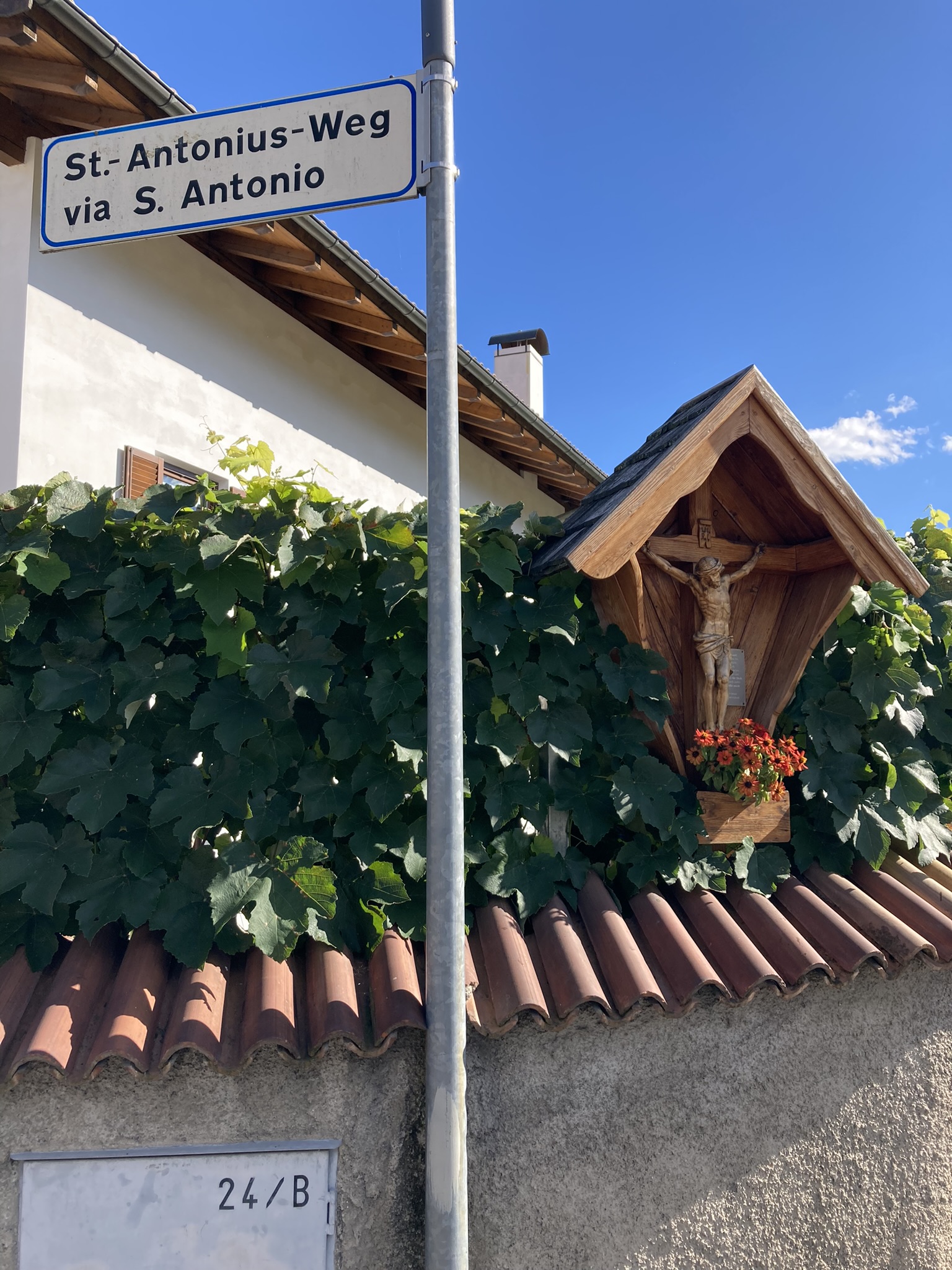
St Anthony’s Way, Autumn. Two tiny terriers snarl ferociously at me when I stop to take the photo, defending their territory against all-comers. It’s good there’s a sturdy fence between us, or they’d tear me to shreds. Or I’d tred on them without noticing.
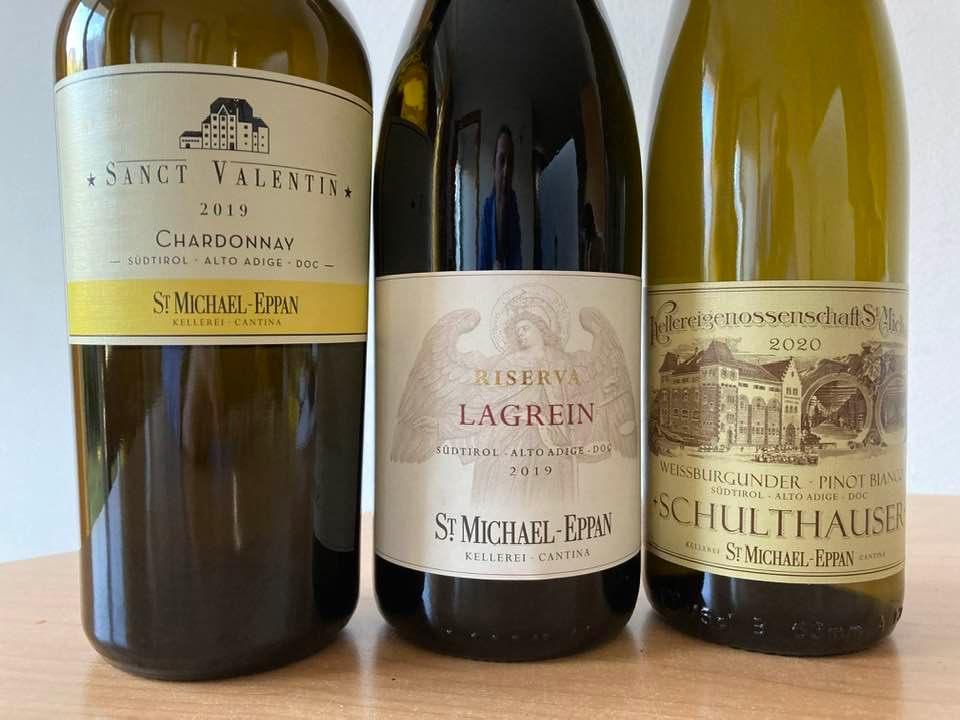
Some notes on wines made by St. Michael-Eppan, a co-op winery located an arduous 600m walk from where I live. They have a large selection of wines across several ranges, of which the Sanct Valentin wines are the top of the range, and the single vineyard wines are the middle. The quality seems generally excellent.
2020 St Michael-Eppan Schulthauser Weißburgunder Colour: medium(-) lemon-green Nose: medium(-) intensity, secondary, youthful, clean. Fresh and stewed pear, heritage apple varieties. Lemon, lemon peel. Lemon curd. Apricots. Wet stones. Some leesy richness. Just the slightest hint of cedary French oak. Palate: medium(+) acidity, medium alcohol (13,5%), medium bodied. Medium(+) intensity, medium(+) length finish. Fresh and stewed pear, heritage apple varieties. Lemon, lemon peel. Lemon curd. Apricots. Wet stones, saline, minerally. Some leesy richness. Just the slightest hint of cedary French oak (15% is barrel fermented). Bracing, fresh, lithe, stoney. Conclusions: very good to outstanding. Can drink now, but suitable for ageing or further ageing. Seal: DIAM5 cork.
2019 St Michael-Eppan Sanct Valentin Chardonnay Colour: medium(-) lemon-green Nose: medium intensity, secondary, youthful, clean. Lemon, lemon curd. Peach, nectarine. Passionfruit, pineapple? Cedar, hazelnut, walnut, vanilla. Honeycomb. Butter, leesy richness. Palate: dry, medium(+) acidity, medium alcohol (14%), medium(+) bodied. Medium(+) intensity, medium(+) length finish. Lemon, lemon curd. Peach, nectarine. Passionfruit, pineapple? Cedar, hazelnut, walnut, vanilla. Honeycomb. Butter, leesy richness. Some glycerolic richness, smooth mouthfeel. Good example of a rich, riper, medium(+) bodied Chardonnay. Richness and alcohol are nicely balanced by the acidity. Don’t serve too cold! Conclusions: very good. Can drink now, but suitable for further ageing.
2019 St Michael-Eppan Lagrein Riserva Colour: intense purple Nose: intense, secondary, youthful, clean. Mulberry, bramble, black plum, prunes. Blackberry fruit leather. Pomegranate. Cedar, nutmeg, cinnamon, coffee. Earthy, autumnal. Palate: dry, medium acidity, medium(+) tannins, medium alcohol (14%), medium(+) bodied. Medium(+) intensity, medium(+) length finish. Mulberry, bramble, black plum, prunes. Blackberry fruit leather. Pomegranate. Cedar, nutmeg, cinnamon, coffee. Earthy, autumnal. Good on a winter’s evening with a nice steak. Conclusions: very good. Can drink now, but suitable for further ageing. Seal: natural cork
2020 St Michael-Eppan Sanct Valentin Sauvignon blanc Colour: medium lemon green Nose: medium(+) intensity, secondary, youthful, clean. Starfruit, maybe cape gooseberry. Elderflower, gooseberry. Passionfruit! Green snap peas, grassy. Redcurrant? Biscuity lees, touch of old oak. Palate: dry, medium(+) acidity, medium alcohol (14%), medium(+) bodied. Medium intensity, medium length finish. Starfruit, maybe cape gooseberry. Elderflower, gooseberry. Passionfruit! Green snap peas, grassy. Redcurrant? Biscuity lees, touch of old oak, sweet spice. Some creamy, glycerolic mouthfeel. Conclusions: very good. Quite distinct from either NZ or Loire Sauvignon. This was a noticeable step up from their single vineyard “Lahn” Sauvignon, and I think the oak added a bit of extra complexity. Can drink now, but suitable for short-term ageing. Seal: natural cork. Notes from a half bottle.
2020 St Michael-Eppan Sanct Valentin Gewürztraminer Colour: medium lemon Nose: pronounced intensity, secondary, youthful, clean. Lemon peel, lemon cordial. Lychee, pineapple, banana, honeysuckle. Ripe pear. Rose petal. Cream. Palate: off-dry (6,5g/L residual sugar), medium(+) acidity, high alcohol (14,5%), full bodied. Medium(+) intensity, medium length finish. Lemon peel, lemon cordial. Lychee, pineapple, banana, honeysuckle. Ripe pear. Rose petal. Cream. Rounded, oily, creamy mouthfeel. Almost seems dry, especially for a Gewürztraminer — sweetness is balanced by acidity & hint of bitterness. Very aromatic. Conclusions: very good. Drink now, likely not suited for ageing. Seal: natural cork.
2018 St Michael-Eppan Sanct Valentin Cabernet Merlot Colour: medium(+) purple Nose: medium(+) intensity, secondary, youthful, clean. Blackcurrant, red and black plum, mulberry. Strawberry. Charred oak, woodsmoke, cinnamon. Touch of earthiness? Palate: medium acidity, medium(+) tannins, high alcohol (14,5%), medium(+) bodied. Blackcurrant, red and black plum, mulberry. Strawberry. Charred oak, woodsmoke, cinnamon. Touch of earthiness? Quite restrained despite the higher alcohol: not a full throttle, full bodied Cabernet by any means. Conclusions: very good. Can drink now, but suitable for further ageing. Seal: natural cork
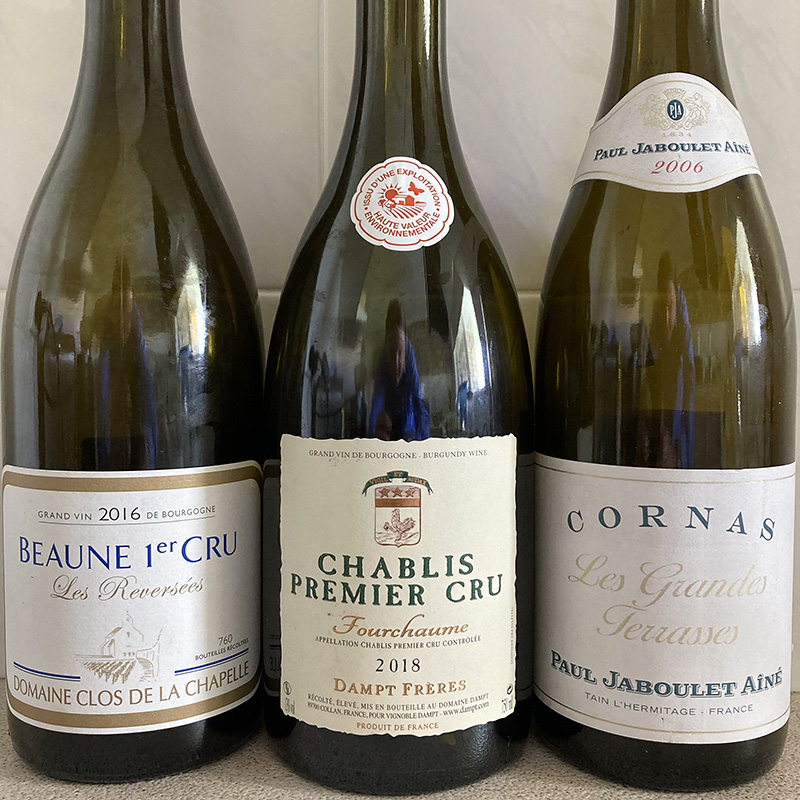
A few nice wines for Christmas Eve and Christmas Day. All were drinking beautifully. The Beaune blanc was a little more oxidative in character than I’d guessed it would be, but I don’t think this was a case of the dreaded prem-ox. It was a beautiful wine, and an interesting interpretation of an otherwise exclusively red wine terroir. The Chablis was beautiful, a good mix of Chablis austerity and fruit richness. It would be interesting to see how it aged. The Cornas was lovely, with some delicious aged, savoury character. The cork fell apart on opening, but had kept the bottle perfectly, and well past the winery’s suggested 10 years.
2016 Domaine Clos de la Chapelle Beaune 1er Cru “Les Reversées” Blanc
Colour: medium(-) gold
Nose: medium(+) intensity, tertiary, developed. Lemon, lemon peel, lime. Starfruit. Heritage apples. Ripe apricot and nectarine. Glacé quince, poached pear. Honey, lanolin, beeswax. Touch of cedar and sweet spice? Mealy, bran, biscuit, burnt butter.
Palate: dry, medium(+) acidity, medium alcohol (13,5%), medium(+) bodied. Medium(+) intensity, medium(+) length finish. Lemon, lemon peel, lime. Starfruit. Heritage apples. Ripe apricot and nectarine. Glacé quince, poached pear. Honey, lanolin, beeswax. Touch of cedar and sweet spice? Mealy, bran, biscuit, burnt butter. Quite rich and round, full. Slightly oxidative?
Conclusions: very good. Drink now, not sure about its ageworthiness
Seal: natural cork
2018 Domaine Daniel Dampt et Fils Chablis 1er Cru “Fourchaume”
Palate: dry, medium acidity, medium alcohol (13%), medium bodied. Medium(+) intensity, medium length finish. Lemon, lemon peel, lemon curd. Nectarine, peach. Orange blossom. Apricot pastry. Butter, brioche, sweet pastry, sweet spice. Touch of steeliness/flintiness. Good balance between citrus, ripe fruit, and Chablis steeliness. Opens up with a bit of air.
Conclusions: very good to outstanding. Can drink now, but suitable for ageing. Just don’t serve too cold!
Seal: natural cork
2006 Paul Jaboulet Aîné Cornas “Les Grandes Terrasses”
Palate: dry, medium acidity, medium(+) tannins, medium alcohol (13%), medium bodied. Medium intensity, medium(+) length finish. Blackberry, blackcurrant, bramble. Maybe black plum. Elderberry. Raspberry, strawberry. Brown sugar, caramel. Forest floor, earthy, leather, black tea, soy sauce. Cedar, cinnamon, nutmeg, biter cocoa. Quite rich and full, with a touch of jamminess, but also quite savoury. Delicious!
Conclusions: very good to outstanding. Drink now, probably not suitable for further ageing
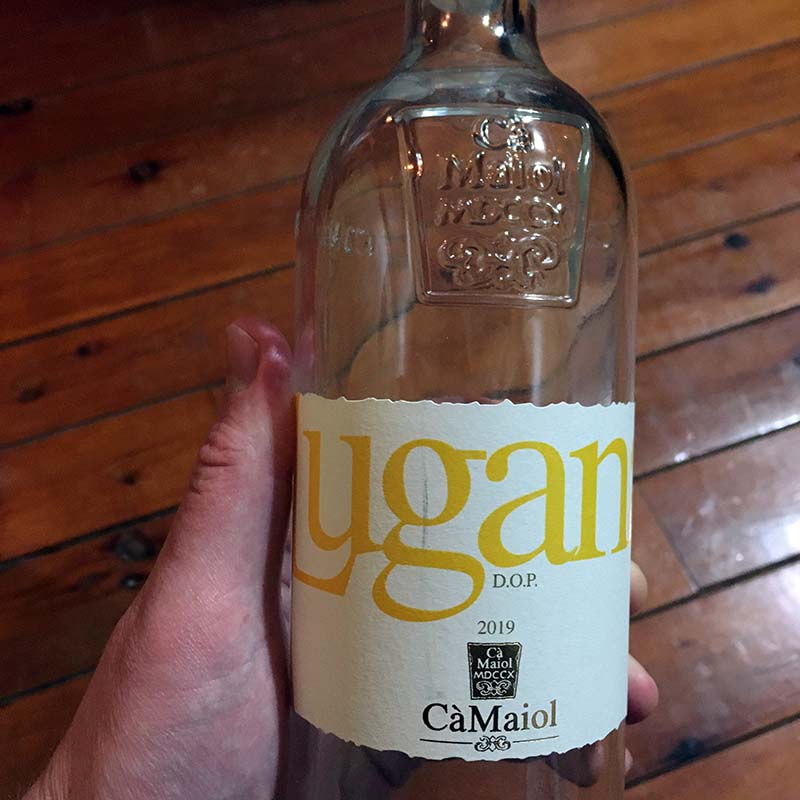
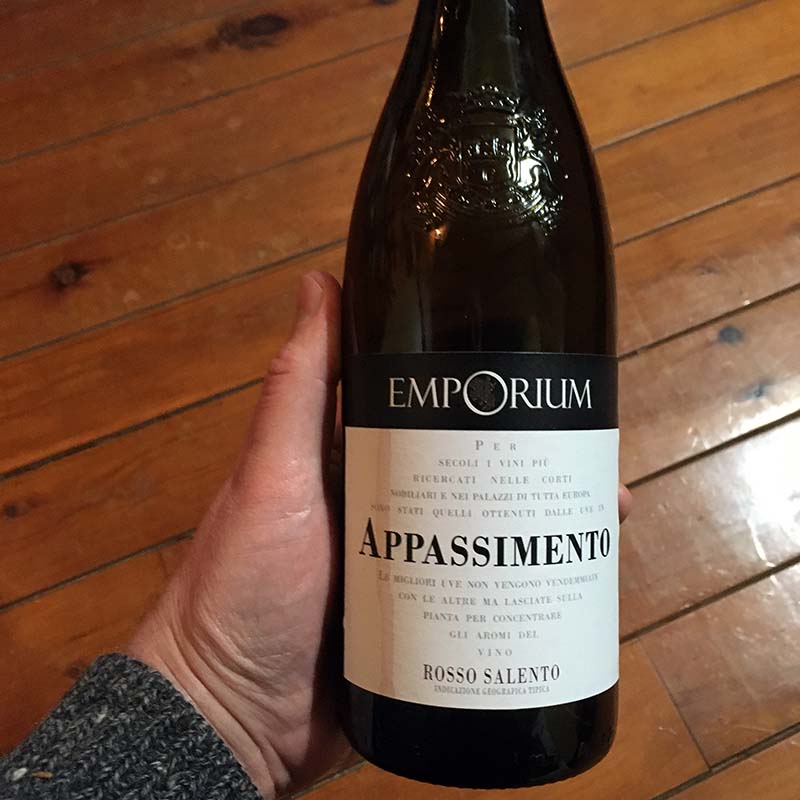
Two very nice, budget-friendly wines from opposite ends of Italy. The Lugana region is near Lake Garda in northern Italy, and the Appassimento is from Puglia in the far south. Both were drinking beautifully, and both might age well for another few years. Excellent value, and well worth looking out for!
Nose: medium intensity, secondary , youthful. Lemon, lemon peel, green apple. White flowers. Passion fruit, underripe pineapple. Bitter almonds? Biscuity lees character.
Palate: dry, medium(+) acidity, medium alcohol (13%), medium bodied. Medium length finish, medium intensity. Lemon, lemon peel, green apple. White flowers. Passion fruit, underripe pineapple. Bitter almonds? Biscuity lees character. Lithe, lots of fresh acidity, but lots of fruit character and some richness.
Nose: intense, secondary, youthful. Red and black plum, blackberry jam, stewed tamarillo. Dried orange peel, cinnamon, clove, vanilla, cedar. Coffee. Dried moscatel grapes? Leather, earth.
Palate: dry to off-dry, medium(+) acidity, medium tannins, high alcohol (14,5%), full bodied. Pronounced intensity, medium(+) finish. Red and black plum, blackberry jam, stewed tamarillo. Dried orange peel, cinnamon, clove, vanilla, cedar. Coffee. Dried moscatel grapes? Leather, earth. Lots of rich, ripe, fruit sweetness that’s balanced by the minerality, the drying tannins, and the fresh acidity, that’s just enough to keep it in balance. Aims to be a ‘vino di meditazione’, and pretty much managed it. Very good value for money.
Conclusions: good to very good. Can drink now, but suitable for ageing. Seal natural cork Blend of primitivo and negramaro grapes